Gravity infusion sets are a crucial component in medical treatments, delivering fluids to patients effectively. However, clinicians often face the challenge of understanding what causes flow rate fluctuations in gravity infusion sets. These fluctuations can impact the delivery of medication, which is vital for patient care.
Various factors contribute to this phenomenon. One major factor is the design of the infusion set itself. Differences in tubing diameter, length, and even the nature of the drip chamber can lead to inconsistent flow rates. Additionally, the characteristics of the fluid being administered, such as viscosity and temperature, also play significant roles.
Environmental conditions like temperature and altitude may unexpectedly alter how fluids flow through the system. Equipment setup and position can influence gravity's effects on flow rates. Understanding these elements is essential for healthcare providers. Reflecting on these factors allows clinicians to improve patient outcomes. It emphasizes the importance of continuous learning and adaptation in medical practices.
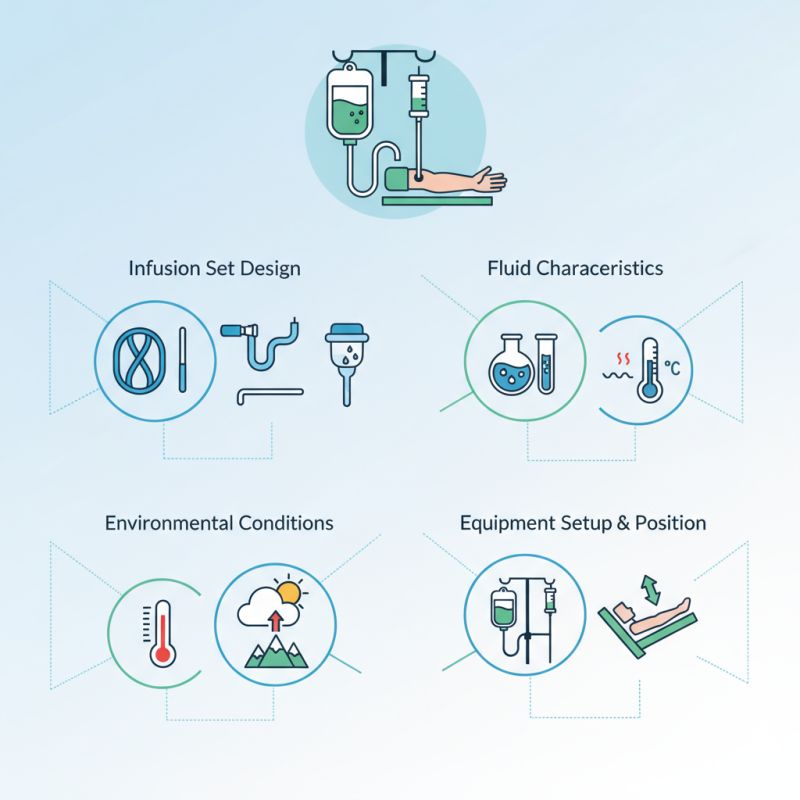
Gravity infusion sets are commonly used in various medical settings. However, fluctuations in flow rate can lead to inconsistent medication delivery. Understanding the causes of this variability is essential for healthcare providers. Several factors influence flow rates, including the height of the infusion bag, tubing diameter, and the presence of air bubbles.
One key factor is the infusion bag height. A higher bag usually promotes faster flow. Conversely, a lower bag may slow down the infusion, leading to erratic flow rates. Additionally, if the tubing has kinks or blockages, it can affect the pressure and flow. This can be easily overlooked, but it's crucial to check the tubing regularly.
**Tips**: Always ensure the infusion bag is at an appropriate height. Consider using a level surface to avoid any unexpected changes. Regularly inspect your tubing for kinks or blockages. This may seem minor, but it can change the infusion rate significantly.
The composition of the fluid also matters. Different types of fluids may have varying viscosities. Thicker fluids may flow more slowly, creating fluctuations in delivery. Understand the patient's needs to ensure the correct fluid is utilized.
**Tips**: If you notice unsteady flow, reevaluate the fluid choice. It might be worth discussing alternatives with a healthcare professional. Staying informed can improve patient outcomes and reduce complications.
This chart illustrates the common causes of flow rate variability in gravity infusion sets, highlighting that clogged tubing and kinked lines are the most frequent issues encountered. Understanding these factors can help healthcare providers ensure consistent and accurate fluid delivery.
Gravity plays a crucial role in infusion dynamics, especially in gravity infusion sets. The principle of gravity ensures that fluids flow from a higher point to a lower one. This flow is influenced by various factors. For instance, the height of the IV bag directly impacts the rate at which fluid enters the patient’s system.
Environmental conditions can also affect gravity's influence on infusion rates. Variations in temperature might cause the fluid to expand or contract, impacting flow consistency. If the infusion set is bent or kinked, the flow may be interrupted, leading to fluctuations in delivery rates. These are common issues that many healthcare professionals encounter.
Understanding these dynamics is essential for effective patient care. It’s important to regularly check infusion setups for blockages or positioning issues. Continuous training and observation can enhance the reliability of gravity infusion systems. Each setup is unique, and small details can significantly impact performance. This underscores the need for attention to detail in clinical practice.
In gravity infusion sets, flow rate fluctuations are influenced significantly by the tubing's length and diameter. Longer tubing can lead to increased resistance, causing reduced flow rates. For instance, a study showed that flow rate could decrease by up to 10% for every additional meter of tubing used. This resistance is primarily due to the friction between the fluid and the inner walls of the tube.
The diameter of the tubing also plays a crucial role. A narrower tubing may lead to a higher velocity of the fluid, but it can also increase turbulence, which may introduce air bubbles. A report highlighted that using a 2 mm inner diameter tube versus a 4 mm one showed flow rate differences of nearly 25% due to these factors. Adjusting the diameter can thus significantly enhance or hinder the overall efficacy of fluid delivery.
Practitioners must consider these parameters carefully. Tubing material, along with its surface smoothness and flexibility, can also affect flow rates. Though the ideal setup may seem straightforward, variations in patient conditions can lead to unpredictable outcomes. A deeper understanding of these dynamics is essential for enhancing the reliability of infusion therapy.
Fluid properties play a crucial role in flow rate fluctuations within gravity infusion sets. The viscosity of the fluid can significantly influence how easily it flows through the set. Higher viscosity can lead to slower flow rates, as thicker fluids face greater resistance. This creates a challenge for healthcare providers when administering medications or fluids. Clinicians must be aware of how different formulations can affect overall treatment efficiency.
Additionally, the density of the fluid affects gravitational pull. This pull impacts how fluid interacts with the infusion set. When using a heavier fluid, the set may experience more stable flow rates. However, fluctuations can still occur, leading to inconsistent dosing. Understanding these relationships is vital for optimizing patient care. Moreover, temperature changes can alter fluid properties. Warmer fluids often flow more smoothly, which can be beneficial in avoiding uneven delivery.
While it’s important to recognize fluid properties, other factors also contribute to flow rate stability. For example, air bubbles can disrupt the flow, causing pauses or spikes. Infusion set design can also contribute to variations. Healthcare professionals must routinely evaluate these elements to ensure proper functioning. Ignoring these factors risks uneven fluid delivery, which can have serious implications for patient outcomes. Exploring these intricate details encourages continuous improvement in practice.
Positioning and height play crucial roles in the stability of infusion rates within gravity infusion sets.
Research indicates that a mere 10 cm change in height can result in a flow rate variation of 5 to 15%.
This fluctuation stems from hydrostatic pressure differences. For instance, raising the bag increases pressure, leading to a faster flow.
Conversely, lowering it can inhibit flow, highlighting the sensitivity of infusion accuracy.
A study by the Infusion Nurses Society found that improper positioning contributes to erratic flow rates.
Infusion sets placed at uneven angles may lead to air bubbles forming within the tubing.
These bubbles cause interruptions and irregularities in medication delivery.
It's also noted that standard practice recommends keeping the infusion bag at least 30 cm above the patient.
Yet, many clinical settings do not strictly adhere to this guideline, raising questions about the uniformity of patient treatment.
Considering the importance of flow rate stability, healthcare professionals must be vigilant.
Frequent monitoring of the setup and adjustments based on patient position can mitigate fluctuations.
Importantly, the common practice of visual inspection should not be the sole reliability measure.
Regular training on best practices for position and height can improve infusion rate consistency and patient outcomes.
: Longer tubing increases resistance, leading to reduced flow rates. A study showed a 10% decrease per meter.
A narrower tubing may increase fluid velocity but can also cause turbulence and air bubbles.
Yes, changing diameter can alter flow rates by up to 25%, as demonstrated in studies.
Positioning affects hydrostatic pressure. A 10 cm height change can lead to a 5 to 15% flow rate variation.
It can cause air bubbles in the tubing, leading to erratic medication delivery.
It is recommended to keep the bag at least 30 cm above the patient for optimal flow.
They should watch the setup and adjust based on the patient's position to reduce fluctuations.
No, visual checks alone are not sufficient. Regular training and monitoring are crucial for consistency.
Tubing material and its smoothness can impact flow rates, influencing the overall delivery effectiveness.
No, patient conditions can lead to unpredictable outcomes, highlighting the need for deeper understanding.
Flow rate fluctuations in gravity infusion sets can be attributed to several key factors. One primary cause is the influence of gravity on infusion dynamics, which governs how fluid moves through the system. Additionally, the length and diameter of the tubing play significant roles; longer or narrower tubing can lead to increased resistance and variable flow rates. The properties of the fluid itself, including viscosity and density, further impact flow stability, causing fluctuations during administration.
Positioning and height differences also contribute to these variations, as any shift in the height of the fluid source can alter the hydrostatic pressure, affecting the rate at which the fluid flows. Understanding what causes flow rate fluctuations in gravity infusion sets is essential for optimizing infusion therapy and ensuring accurate medication delivery.

Nexus Medical