How to Reduce Gravity Infusion Set Flow Fluctuations?

Time:2026-10-05 Author:Sophia
0%

Gravity infusion sets appear simple: a fluid bag hangs above the patient, while tubing carries solution through a drip chamber. Yet a steady-looking setup can still produce an uneven flow. Small changes matter. The drip rate may slow when the bag becomes nearly empty, or rise after the tubing shifts. Understanding these details supports safer, more consistent infusion practices.

A practical introduction must ask, “what causes flow rate fluctuations in gravity infusion sets?” Common causes include changing bag height, unstable roller-clamp settings, air bubbles, kinked tubing, and movement at the catheter site. Fluid viscosity also affects resistance. A cold, thick solution may pass differently from a room-temperature solution. Patient position can alter the downstream pressure. Even the drip chamber angle can make counting drops less reliable. Watch the chamber closely.

This guide examines how to reduce these fluctuations through careful setup, observation, and controlled adjustment. Clinicians should follow the set manufacturer’s instructions, local protocols, and facility-based safety procedures. Checking the bag height, tubing path, clamp position, and catheter patency can reveal problems before they become obvious. A stopwatch and a clear view of the drip chamber remain useful. However, no checklist catches every disturbance. That limitation deserves attention. A tidy arrangement may still drift when the patient coughs, turns, or raises an arm. Reliable practice therefore combines technical knowledge with repeated bedside assessment, accurate documentation, and timely escalation when the prescribed flow cannot be maintained. Small corrections help. Careful reassessment matters more.
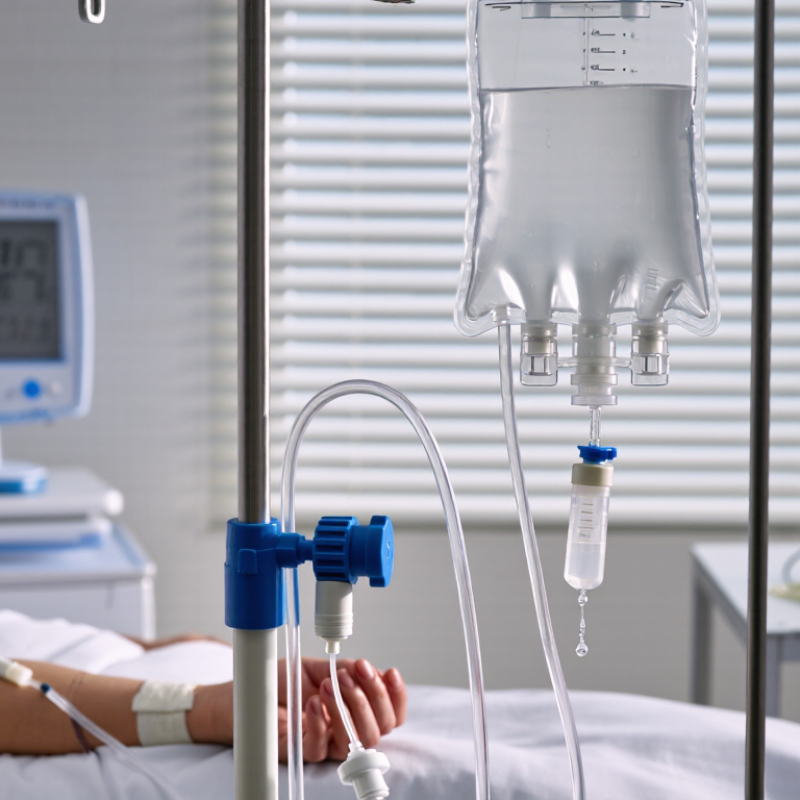
How to Reduce Gravity Infusion Set Flow Fluctuations?

Understanding the Causes of Gravity Infusion Set Flow Fluctuations

How to Reduce Gravity Infusion Set Flow Fluctuations?

Understanding the Causes of Gravity Infusion Set Flow Fluctuations

Gravity flow is rarely as steady as it appears. As the fluid bag empties, hydrostatic pressure gradually falls. A 1,000 mL bag can therefore deliver differently at the beginning and end of an infusion. Tubing kinks, loose connections, narrow cannulas, and partially closed roller clamps add resistance. Patient movement can also change the catheter position and disturb the flow.

Viscosity matters. Cold or concentrated solutions usually move more slowly. Air bubbles may interrupt the liquid column, causing brief surges after they move. In clinical checks, placing the bag at a consistent height and keeping tubing visible can reveal these changes quickly. The FDA reported more than 56,000 infusion-pump adverse-event reports between 2005 and 2009, showing why flow control deserves careful attention, although this figure is not specific to gravity sets.

Small details matter.

The WHO estimates that medication errors cost about US$42 billion worldwide each year. That estimate covers many error types, not gravity infusion alone. Still, it highlights the risk of treating flow variation as harmless. Staff should inspect the full line, confirm the prescribed rate, and reassess after patient repositioning. A timer-based volume check is useful, but it is imperfect. Temperature, solution density, and catheter resistance may still distort the result. In practice, repeated observation often exposes problems that a single measurement misses.

Checking the Infusion Setup and Equipment

How to Reduce Gravity Infusion Set Flow Fluctuations?

Checking the infusion setup should come before changing the prescribed rate. Place the fluid container at a stable height above the patient’s access site. A small height change can alter gravity pressure. Examine the tubing from the container to the catheter. Look for tight bends, compressed sections, loose connections, or trapped air. The roller clamp should move smoothly and remain positioned as prescribed. Check the drip chamber. It should be partly filled, not completely full. An overfilled chamber makes drops difficult to count.

Tips: Count drops for a full minute. Do not estimate too quickly. Confirm the tubing matches the prescribed equipment and inspect its filter, if present. Check the patient’s position and the catheter site for swelling, pain, leakage, or resistance. A change in arm position may change the flow. It is tempting to blame the equipment immediately, but the access site may be the real problem. Never force a flush or alter the prescribed rate without clinical guidance.

Temperature and fluid thickness can also affect gravity flow. Cold solutions may move more slowly through narrow tubing. Some fluids naturally require closer monitoring. Recheck the setup after repositioning the patient or raising the bed. If fluctuations continue, stop and follow local clinical procedures. Ask a qualified clinician to assess the line, container, and access site. My own checklist would include the simplest details first; small oversights are surprisingly common.

How to Reduce Gravity Infusion Set Flow Fluctuations?

Checking the infusion setup and equipment

The chart compares representative observed flow rates with a 100 mL/h target during common gravity-infusion checks. Flow stability generally improves when the fluid head is consistent, the roller clamp is fully adjusted, the tubing is free of kinks, and the catheter or filter is not partially occluded. The readings are illustrative training data rather than clinical performance specifications.

Adjusting the Fluid Bag, Tubing, and Drip Chamber

How to Reduce Gravity Infusion Set Flow Fluctuations?
Adjusting the Fluid Bag, Tubing, and Drip Chamber

Gravity infusion depends on height, pressure, and an unobstructed pathway. Place the fluid bag on a stable pole, above the patient’s access site. A small height change can noticeably alter the flow rate. Keep the bag upright and check that it is not pressed against nearby equipment. Replace the bag before it becomes nearly empty.

Inspect the tubing from the bag to the drip chamber. Straighten tight bends and remove loops resting under bedding. Make sure the roller clamp moves smoothly without sudden jumps. Do not squeeze or stretch the tubing. That can create temporary pressure changes. The drip chamber usually needs a visible, consistent fluid level. If it is overfilled, counting drops becomes difficult. If it is nearly empty, air entry may become a concern.

Watch the chamber for several minutes after any adjustment. Count drops only when the fluid is falling steadily. Compare the observed rate with the prescribed instructions, not memory. In practice, hurried adjustments often cause more fluctuation than the original problem. I have also found that a seemingly level pole may lean slightly on uneven flooring. Recheck the setup from the side. If the rate remains unstable, the tubing looks damaged, or air appears in the line, stop adjusting it and contact a qualified healthcare professional. Never change the prescribed flow without clinical guidance.

Managing Patient Position and Infusion Site Factors

How to Reduce Gravity Infusion Set Flow Fluctuations?

Managing Patient Position and Infusion Site Factors

Gravity infusion can change when a patient shifts position. A raised arm, bent elbow, or compressed limb may alter resistance around the catheter. Keep the patient comfortable, while maintaining a neutral position. Support the arm with a soft pillow. Avoid placing pressure directly over the infusion site.

Small details matter. Check that the tubing follows a smooth path without tight bends, knots, or dependent loops. The infusion bag should remain at a suitable height above the site, according to local clinical procedures. Ask the patient to report discomfort, swelling, coolness, or burning promptly. These signs may indicate a site problem, not simply slow flow.

Observe the site regularly.

Bedside practice shows that quick visual checks can miss early changes. Compare the site with the surrounding skin, and watch for leakage or increasing resistance. Do not force the flow or repeatedly reposition the catheter without assessment. A patient may look comfortable while the line remains partially compressed. I have found that position-related fluctuations are easy to underestimate, especially during sleep or transfers. Documentation should include the patient’s position, site appearance, and any corrective action taken. When flow remains unstable, follow facility policy and seek assessment from a qualified healthcare professional.

Monitoring and Preventing Ongoing Flow Variations

Gravity infusion flow rarely stays perfectly steady. A drip chamber may look normal while the delivered volume slowly changes. Continuous observation is more useful than a single rate check. Record the prescribed rate, chamber drops, bag height, and time. Recheck after repositioning the patient or replacing tubing. Small changes matter.

Keep the fluid container at a stable height, usually well above the access site, and inspect the line from end to end. A bent segment, tight clothing, closed roller clamp, or compressed catheter can reduce flow. Air bubbles, rising resistance, and a cool or viscous solution may also alter drops. Observe the insertion site for swelling, leakage, pain, or unusual coolness. These signs need prompt clinical assessment, not a faster clamp adjustment. Never force a sluggish line.

Ongoing variation often follows movement. Ask the patient to keep the limb relaxed, then compare the rate before and after movement. Use a timed volume check when accuracy is important, and document each observation with the patient’s position. In practice, I have sometimes blamed the tubing too quickly; the real issue was access position. That mistake is worth remembering. Follow local protocols, verify the order, and ask qualified staff to assess persistent changes or suspected occlusion.

How to Reduce Gravity Infusion Set Flow Fluctuations? - Monitoring and Preventing Ongoing Flow Variations

Monitoring Dimension Typical Target or Baseline Variation Indicator Likely Cause Preventive Action Recommended Check Frequency
Prescribed flow rate Maintain the prescribed rate, commonly within ±10% when clinically appropriate. Repeated readings outside the agreed tolerance. Incorrect roller-clamp position, changes in hydrostatic pressure, or downstream resistance. Confirm the prescribed rate, level the fluid container, and adjust the clamp gradually. At setup, after adjustments, and at regular clinical observations.
Fluid container height Keep the container consistently above the access site; use a stable height according to local procedure. Flow decreases when the container is lowered or increases after elevation. Changing hydrostatic head caused by container movement or bed adjustment. Secure the container and recheck the rate after bed, pole, or patient-position changes. After every position or equipment-height change.
Tubing position Tubing should remain open, supported, and free from sharp bends or compression. Intermittent slowing or brief stoppages during movement. Kinking, clamping by bed rails, tension, or a tight dressing. Route tubing in a gentle loop, avoid contact with moving parts, and leave sufficient slack. At setup and whenever the patient or bed is repositioned.
Air in the line No clinically significant air bubbles; the drip chamber should be filled to the level specified by the procedure. Visible bubbles, irregular drip formation, or repeated air entry. Improper priming, loose connections, or an emptying container. Prime the set according to procedure, inspect connections, and replace the container before it is empty. During priming and each routine line inspection.
Drip chamber behavior Drops should form at a steady, observable rhythm. Drop rate varies by more than approximately 10% over repeated one-minute counts. Unstable head pressure, partial occlusion, air bubbles, or an incorrectly positioned chamber. Recheck container height, tubing patency, chamber position, and clamp setting. During initial stabilization and after any flow complaint.
Access-site condition Site remains patent, comfortable, and free from swelling, leakage, redness, or unusual resistance. Pain, swelling, coolness, leakage, or increasing resistance. Infiltration, extravasation, dislodgement, phlebitis, or catheter malposition. Stop and assess according to clinical protocol; do not force the infusion or flush against resistance. At initiation and at every scheduled patient assessment.
Connection security Connections are fully seated, secure, and free from leakage. Moisture, looseness, leakage, or visible separation. Loose connection, damaged component, or excessive movement of the line. Check and secure connections using aseptic technique; replace damaged components. At setup and whenever leakage or flow change is observed.
Solution temperature and viscosity Use the solution within the storage and administration conditions specified by the clinical procedure. Flow is consistently slower with cold or more viscous solutions. Increased viscosity, inappropriate storage, or solution incompatibility. Verify storage conditions and follow approved preparation and administration instructions. Before administration and when flow differs from the expected pattern.
Observation and documentation Record rate, patient position, container height, site condition, and corrective actions. Unexplained recurring changes or missing trend information. Inconsistent checks, undocumented adjustments, or handover gaps. Use a consistent observation checklist and document each intervention and response. At initiation, during scheduled rounds, and at handover.
Safety note: If flow changes are accompanied by pain, swelling, leakage, redness, shortness of breath, or other concerning symptoms, stop the infusion when clinically appropriate and follow the applicable clinical protocol.

FAQS

Why can a gravity infusion rate change during treatment?

The fluid bag loses hydrostatic pressure as it empties. A full 1,000 mL bag may flow differently near the end. Patient movement can also shift the catheter.

How does bag height affect gravity flow?

Keep the bag upright on a stable pole, above the access site. Even a small height change can alter the rate. Check the pole from the side.

What tubing problems can slow or interrupt flow?

Kinks, tight bends, loose connections, bedding loops, and narrow access devices add resistance. Straighten the line gently. Do not squeeze or stretch it.

Why can cold or concentrated solutions flow more slowly?

Higher viscosity creates more resistance inside the tubing. Cold or concentrated fluid may therefore move slowly. The exact effect depends on the solution and setup.

What should I check in the drip chamber?

Look for a visible, steady fluid level and falling drops. An overfilled chamber makes counting difficult. A nearly empty chamber may allow air entry.

Can air bubbles cause sudden flow changes?

Yes. Air can interrupt the liquid column, followed by a brief surge when it moves. If air appears, stop adjusting the setup. Contact a qualified healthcare professional.

How can I verify the flow rate?

Compare the observed rate with the prescribed instructions, not memory. A timer-based volume check can help. This check is not foolproof.

What should happen after repositioning the patient?

Reinspect the full line and reassess the flow. Watch the chamber for several minutes after any adjustment. Repeated observation may reveal problems missed by one measurement.

What should I do if the rate stays unstable?

Check for damaged tubing, air, bends, or an unstable pole. Do not change the prescribed flow independently. Seek qualified clinical guidance. Small details matter.

Conclusion

Gravity infusion set flow fluctuations can result from several factors, including changes in the fluid bag height, partial compression or kinking of the tubing, air bubbles, an improperly adjusted clamp, or inconsistent pressure within the drip chamber. Understanding what causes flow rate fluctuations in gravity infusion sets is essential for maintaining a steady and predictable infusion. Equipment should be checked carefully for blockages, leaks, loose connections, and a correctly filled drip chamber before starting treatment.

Stable flow also depends on positioning the fluid bag at an appropriate height and keeping the tubing straight and unobstructed. The patient’s position, movement, and the condition of the infusion site may affect resistance and flow, so the site should be observed regularly for swelling, discomfort, or dislodgement. During the infusion, monitor the drip rate and patient condition, make gradual adjustments when necessary, and recheck the entire setup whenever the flow changes unexpectedly.

Sophia

Sophia

Sophia is a dedicated marketing professional with an exceptional depth of knowledge about her company's products and services. With a keen understanding of market trends and customer needs, she crafts insightful blog posts that not only inform but also engage readers, enriching the company’s online......