A colored component can catch the eye before a clinician reads a label. But color alone cannot confirm a medicine, dose, or route. That distinction matters when asking, “why are disposable syringes color-coded in clinical settings?” In practice, color may help staff quickly distinguish equipment or identify a needle gauge, but meanings can vary by product and facility. Not every disposable syringe follows one universal color system.
The World Health Organization’s 2017 report, Medication Errors, estimated that medication errors cost about US$42 billion globally each year. That figure covers medication errors broadly; it does not measure errors caused by syringe color. It does, however, show why reliable identification checks matter. ISO 6009:2016 specifies color coding for single-use hypodermic needles, helping identify needle sizes. It is not a universal color key for syringe barrels or their contents. Small detail. A clear barrel, printed graduations, and a legible medication label each provide different information. Clinical teams should follow the product instructions and their facility’s procedures, then verify the drug, concentration, and volume independently. Color can support that process. It cannot replace it. And honestly, a color cue may feel reassuring even when it is not enough. That is worth remembering.
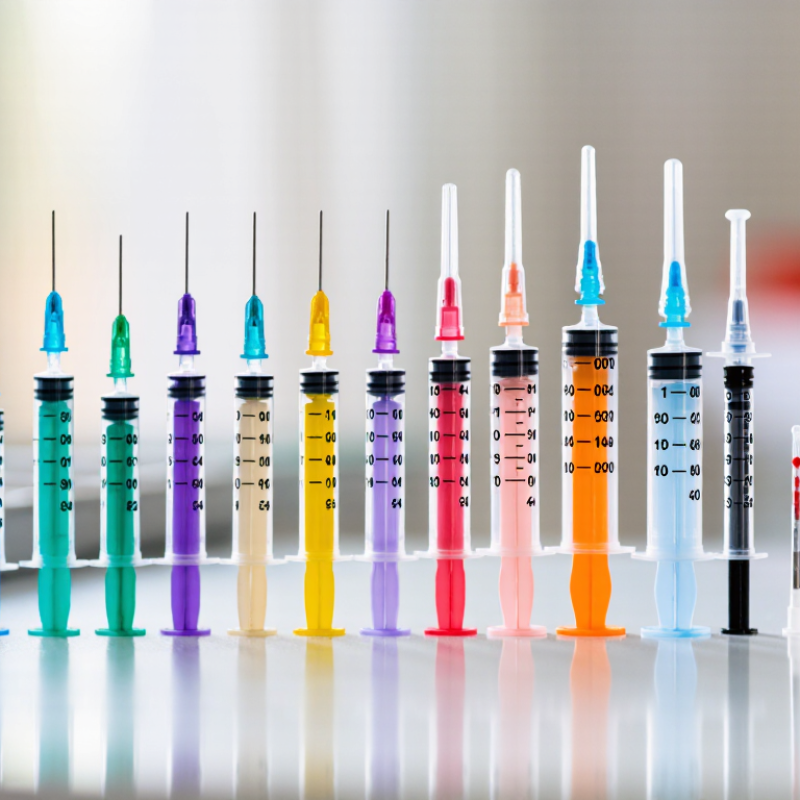
A colored syringe plunger can look like a code, but its meaning may depend on the manufacturer. Colors on barrels, plungers, or packaging are not a universal system for identifying dose, contents, or needle size. A blue plunger on one product does not guarantee the same meaning on another. Check the printed graduations and product labeling.
ISO 6009 is different. It specifies color coding for the hubs of single-use hypodermic needles, linked to the needle tube’s nominal outside diameter. The hub is the small connector at the needle base, not the syringe barrel. A colored hub can help staff distinguish needle sizes quickly. But color alone is not enough.
Look closely. Confirm the size printed on the package, and check that the needle is compatible with the syringe and intended procedure. Lighting, faded labels, and similar shades can cause mix-ups. It is easy to assume every medical color follows one standard. That assumption deserves a second look. Use the device information, not appearance alone.
A needle hub’s color is a fast visual cue, not a code for the medicine inside a syringe. ISO 6009:2016 standardizes colors for single-use hypodermic needles by nominal outside diameter, commonly described by gauge. For example, 21G is green, 23G is blue, and 25G is orange. Gauge can feel counterintuitive: a higher number generally means a narrower needle. Check the printed gauge and diameter, too.
The World Health Organization has estimated that about 16 billion injections are administered worldwide each year. In busy clinical settings, a consistent hub color can help staff distinguish needle sizes at a glance. But it cannot confirm a needle’s full specification or suitability for a particular procedure. The package label remains essential.
It is tempting to stop at the color. That is not enough. Before use, compare the hub with the package, especially when several sizes sit together in a tray. Poor lighting, similar shades, or damaged packaging can make visual identification unreliable. ISO 6009:2016 supports consistent color recognition, but the color identifies needle size—not drug, dose, or clinical purpose. A useful reminder, though easy to overlook.
In common needle color-coding systems, pink usually marks 18G, green 21G, and blue 23G. The color is typically on the needle hub, not the syringe barrel. It offers a quick visual clue, but the package label remains the more reliable check.
Gauge numbers can feel counterintuitive: a lower number means a wider needle. An 18G needle has a larger outer diameter than a 21G, while a 23G is narrower still. Picture three openings side by side; the pink-coded 18G has the broadest, and the blue-coded 23G the smallest. These differences can affect flow and tissue entry, but gauge alone does not determine whether a needle is suitable for a particular procedure.
Color conventions are widely used, yet they may vary by standard or supplier. Check the printed gauge and length before use, especially when several sizes sit together in a tray. Small detail. A familiar color can be misread in dim light, and color perception varies between people. I would not treat the hue as proof of size; verify the label and follow the applicable clinical protocol.
Color can suggest a syringe’s capacity, but it should never replace checking the barrel. Under ISO 7886-1:2017, single-use hypodermic syringes are assessed against requirements that include their capacity and graduated scale. Read the printed capacity and confirm the unit, usually millilitres. A 1 mL syringe has a different scale spacing from a 10 mL syringe, so the same-looking line does not mean the same volume.
Graduation markings show smaller volume steps within the syringe’s stated capacity. Check the numbers, line intervals, and legibility before use. Hold the syringe at eye level, with the scale visible, and align the plunger edge specified by the manufacturer with the intended mark. Avoid estimating between unclear lines. Even experienced users can misread a scale when the barrel is tilted; it is an easy mistake to underestimate.
Tips: Compare the capacity label with the graduation interval, not color alone. Check that markings are clear and the plunger moves smoothly. If a scale is damaged, obscured, or unfamiliar, pause and verify the instructions. ISO conformity helps establish consistent design expectations, but careful reading at the point of use still matters. I would not assume every syringe with a similar color uses the same scale.
A colored barrel or plunger can help staff distinguish products quickly, but color alone does not confirm a syringe’s purpose. Check the package and the syringe label for its intended use, capacity, graduations, sterility status, and whether it is single-use. Match these details to the instructions for the procedure and the device being used. Color alone is not enough.
Standards clarify one common source of confusion. ISO 6009:2016 specifies color coding on single-use hypodermic needle hubs to identify needle size; it does not make syringe-barrel colors a universal guide to contents or compatibility. WHO’s 2015 injection-safety guideline cited an estimate of 16 billion injections worldwide each year. That scale makes clear labeling and careful selection more than a visual convenience. A familiar shade can still mean something different across product types.
Before opening a package, compare its printed details with the instructions for use, and check that the syringe is intact and within its labeled expiry date. If the label is unclear, damaged, or inconsistent with the instructions, pause and ask a qualified healthcare professional rather than guessing. Small print can be easy to miss under bright clinical lights. That is an imperfect safeguard, but it is safer than trusting color by itself.
It indicates the needle’s nominal outside diameter, commonly described by gauge. It does not identify the syringe’s contents or intended use.
Under ISO 6009:2016, 21G is green, 23G is blue, and 25G is orange. Check the printed gauge, too.
No. A higher gauge number generally means a narrower needle. The numbering can feel counterintuitive.
No. Compare the hub with the package label and printed specifications. Poor lighting or damaged packaging can make color hard to judge.
No. Read the capacity printed on the barrel and confirm the unit, usually millilitres. Not by itself.
They show volume steps within the syringe’s stated capacity. A 1 mL syringe and a 10 mL syringe can have different spacing between marks.
Hold the syringe at eye level and keep the scale visible. Align the specified plunger edge with the intended mark.
Pause and check the instructions if markings are damaged, obscured, or unfamiliar. I would not guess between unclear lines.
Understanding why are disposable syringes color-coded in clinical settings begins with distinguishing syringe colors from needle-hub colors. Syringe barrels or plungers may use colors chosen by individual manufacturers, so they do not necessarily indicate a standard size or purpose. Needle hubs, however, use the ISO 6009:2016 color-coding system to identify needle gauge—not the medication inside the syringe. For example, an 18G needle commonly has a pink hub, a 21G needle a green hub, and a 23G needle a blue hub.
Color is only one part of safe selection. Check the syringe’s capacity and graduation markings, which are addressed by ISO 7886-1:2017, and read the product label and instructions before use. Confirm that the syringe and needle meet the needs of the intended procedure rather than relying on color alone, since packaging, markings, and specifications provide essential information.

Nexus Medical